

Plundering Hell
"The One Who Breaks Down Doors And Carries Me Off Is the Mighty One"

“For as Jonah was three days and three nights in the belly of a huge fish, so the Son of Man will be three days and three nights in the heart of the earth.” (Matthew 12:40, NIV)
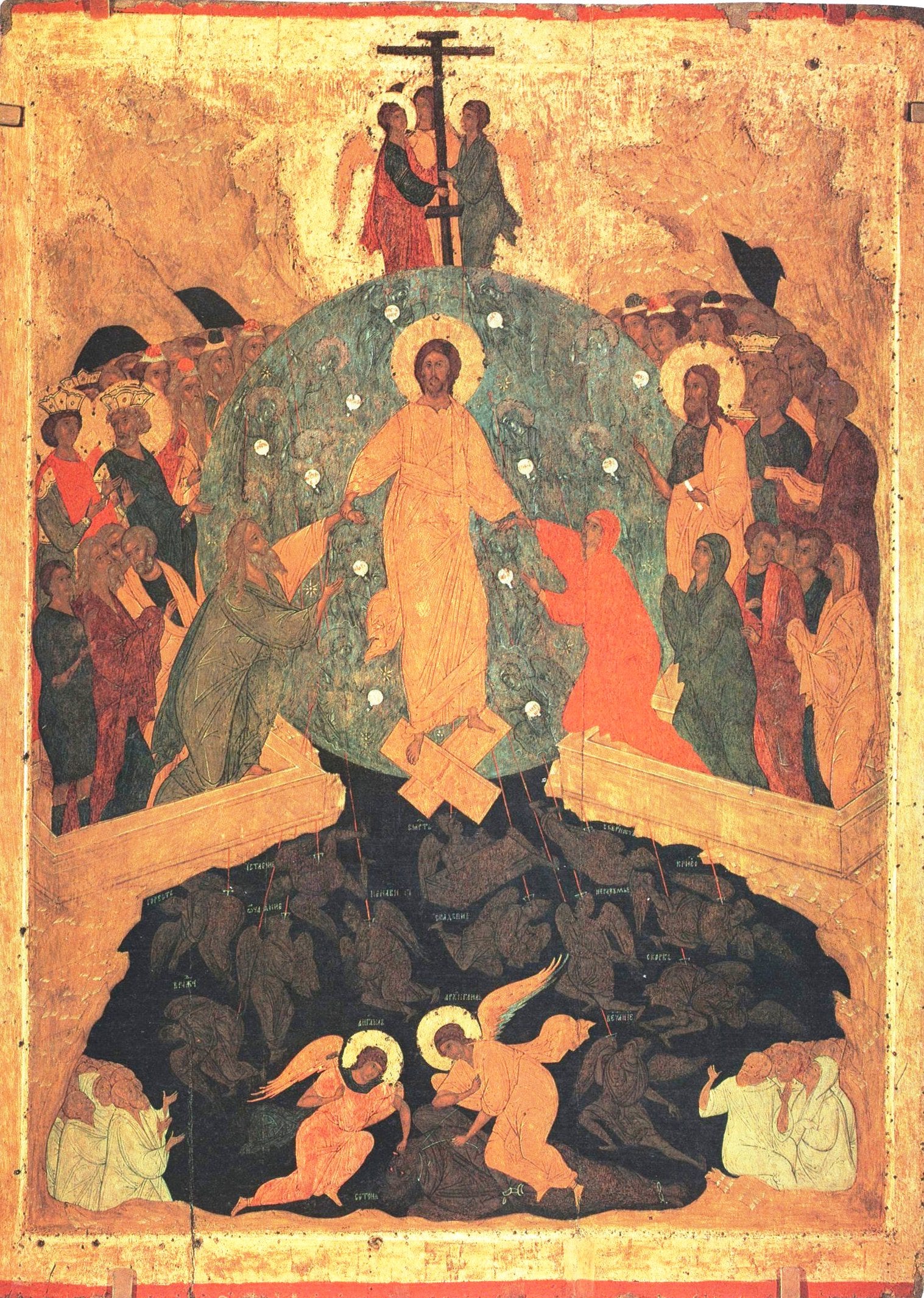
When my sister used to teach third grade at a Christian school, she’d invite me annually to speak. Because I have the joy of taking students at Dallas Theological Seminary to Italy to study Medieval Art and Spirituality, she wanted me to show her pupils something I had shared with her. So she would gather the third-grade classes in her classroom, and I would show and explain a classic image in Christian art: “The Harrowing of Hell.”
The word harrowing comes from an Old English term used of a raiding party to make war, lay waste, ravage, despoil, or plunder. Jesus laid waste the realm of the dead, so I would show these third graders some depictions of Jesus breaking down the doors of Hades.
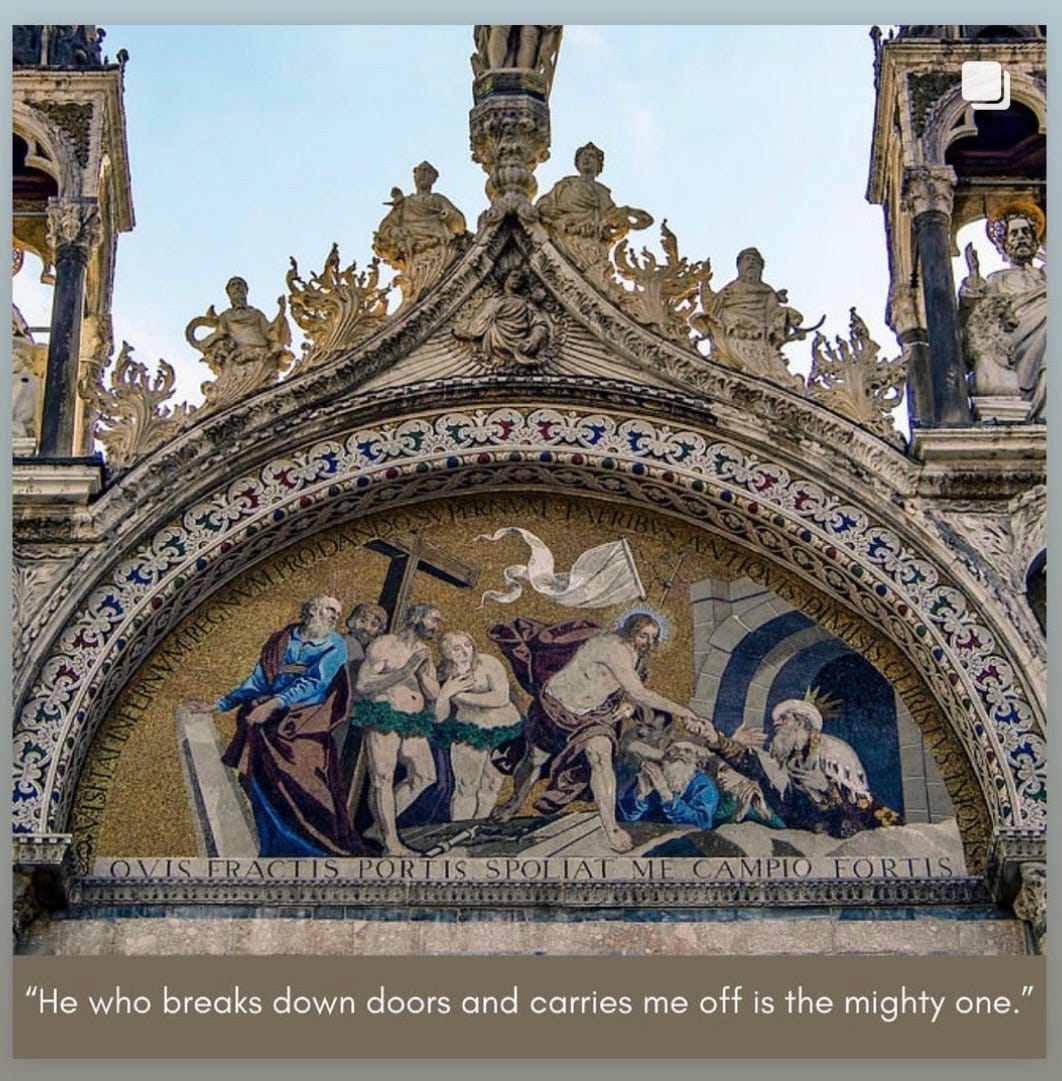
As a subject in art that illustrates biblical truth, the image of Jesus doing so is also called the Anastasis (Greek for “resurrection”), and it first appeared in the West in the eighth century. A typical “Harrowing” shows the nail-pierced Jesus standing triumphant atop the shattered gates of the underworld (Matthew 16:18). And these gates form a cross on the ground, demonstrating Christ trampled death by death. Beneath the broken gate lies Satan, bound amidst shattered chains. And here’s my favorite part—the Lord grasps Adam and Eve by the wrists and pulls them out of coffins. They do not cling to Him. In fact, they do nothing but receive His action. They must depend completely on Jesus’s strength as he raises them from death. The depiction of utter human helplessness expresses the good news that Christ alone saves.
Versions of the image vary somewhat across centuries and miles. Sometimes Jesus raises only Adam while Eve and Old Testament believers follow. Sometimes Christ pulls them all out of the mouth of a big fish. Sometimes David and Solomon make appearances. Often there are shepherds. But Jesus is always conquering death. One of my favorite versions is the Harrowing of Hell mosaic on the exterior of Venice’s St. Mark’s Basilica. The Latin beneath it reads “He who breaks down doors and carries me off is the mighty one.” Yes and amen!
While Christians may hold differing views of what happened between Good Friday and Easter, we share in common the belief that through death Jesus destroyed the one who had the power of death (Hebrews 2:14); Christ is the one who frees captives (Isaiah 61:1; Luke 4:18); our Lord has the power to bind the strong man, Satan (Mark 3:27); and he alone can and does save humans by grace through faith, based on no merit of our own (Ephesians 2:8–9).
The church through the ages has often connected the image I’ve described with Holy Saturday—that silent stretch between Good Friday and Easter Sunday. Many Christians commemorate the day Jesus lay in the tomb by keeping vigil in quiet reflection. Some include prayer and fasting. A number of churches schedule baptisms, emphasizing that we are “buried with him through baptism” (Romans 6:4).
One year, shortly after I returned stateside from teaching on the truths in this image, my mother died. Before her funeral started, I seated myself in a pew, and I looked up to see the officiant setting up a little table at the front of the chapel. As I watched, he set an image on that table in the direct line of sight between my mother’s face and mine. I studied the picture and recognized Christ at the center. He was standing on what looked like some broken logs. And he was grasping a wrist. Then it dawned on me what it was! Sometimes God is hidden—but on that day he was blatantly unsubtle. The One who broke down doors and carried her off is the mighty one.
The Book of Common Prayer includes this gem for Holy Saturday: “How wonderful and beyond our knowing, O God, is your mercy and loving-kindness to us, that to redeem a slave, you gave a Son. O God, Creator of heaven and earth: Grant that, as the crucified body of your dear Son was laid in the tomb and rested on this holy Sabbath, so we may await with him the coming of the third day….”
It may be Saturday. “But Sunday’s comin’.”